The House of Usher’s collapse after Roderick and Madeline’s deaths
The Fall of the House of UsherThe House of Usher’s collapse after Roderick and Madeline’s deaths brings the family’s tragedy and the destruction of its ancestral mansion together in one final event. The collapse follows the return of Madeline, the deaths of both twins, and the narrator’s flight from the house; its last visible fracture opens from roof to foundation before the walls split apart and sink beneath the tarn.
Setting and Causes
The collapse is prepared by the Usher family’s history and by the mansion’s physical condition. The family had continued for generations without an enduring collateral branch, leaving its inheritance and name concentrated in a direct line. The narrator reflects that this continuity had blurred the distinction between the estate and its inhabitants: the name House of Usher referred both to the family and to its mansion. With Roderick and Madeline the last living relatives, their deaths leave no continuing family line.
Madeline’s illness makes the disaster’s immediate background uncertain. Her symptoms had included wasting, apathy, and brief cataleptic episodes; on the evening of the narrator’s arrival, Roderick reported that she had succumbed to her illness. He decided to keep her body in a vault within the house for a fortnight before burial, citing the unusual nature of the disease, the physicians’ inquiries, and the exposed location of the family burial ground. The narrator helped place her in a dark, copper-lined vault beneath his own sleeping room. The choice, treated at the time as a precaution, becomes the condition for her return.
Sounds and Recognition
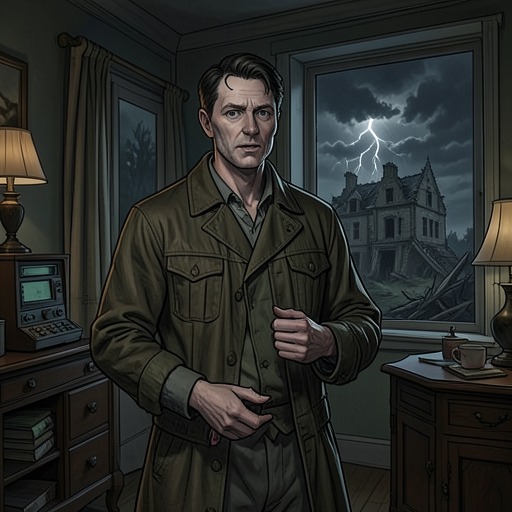
Days after the entombment, Roderick’s conduct changes: he abandons his usual occupations, wanders through the house, and appears increasingly agitated. During a storm, the narrator tries to steady him by reading from The Mad Trist. As the story describes a door being broken, a distant cracking sound seems to answer it; when it describes a dragon’s cry, the narrator hears a harsh, prolonged sound from elsewhere in the mansion. He initially treats these correspondences as coincidences and, mindful of Roderick’s sensitivity, does not draw attention to them.
A third sound, a muffled metallic clang, follows the tale’s account of a shield falling. Roderick then confesses that he has heard Madeline moving in the coffin and struggling in the vault for many days but did not dare speak. He interprets the sounds accompanying the reading as the breaking of her coffin, the opening of the iron door, and her approach through the house. The sequence turns the narrator’s reading into an acoustic frame for the concealed events below: sounds that might be attributed to the storm also become evidence of Madeline’s escape.
Return, Death, and Escape
Madeline appears at the chamber door, having made her way back from the vault. She falls upon Roderick, and he dies. Her return confirms that she was alive when entombed; the events also bring the twins’ lives to an end. The narrator flees the chamber and then the mansion, crossing the old causeway while the storm continues. The account does not settle whether every sound had a natural source, but the return gives Roderick’s fear a concrete cause and makes the vault’s supposed precautions part of the catastrophe.
The Mansion’s Destruction
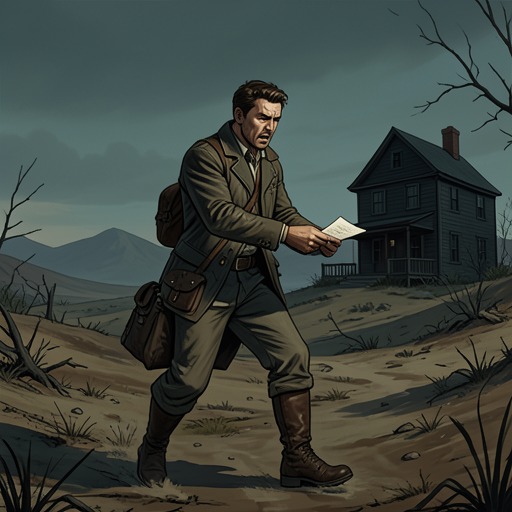
From the causeway, the narrator sees the full, setting moon shine through a fissure already visible in the building, running in a zigzag from roof to base. The crack widens rapidly. As a fierce gust passes, the walls rush apart; a great tumult follows, and the tarn closes over the fragments. The narrator escapes, but the mansion is lost with the last members of the family.
The ending makes the name House of Usher’s double meaning literal in the event’s structure: the deaths of the family and the ruin of its home occur in the same closing movement. The house’s fissure is not first introduced at the moment of destruction; the narrator recognizes it as the crack he had seen before, now enlarged into the visible mechanism of the final collapse. The storm, the moonlight, the widening fracture, and the sinking of the mansion complete the narrative’s progression from ominous setting to irreversible loss, without resolving whether the building’s destruction is wholly natural or carries a more uncanny significance.